Coffee Carts for Sale: The Complete Guide to Owning a Ferla Coffee Cart
A coffee cart gives you a cafe-quality business without the overhead of a storefront. We design and manufacture every Ferla cart in the USA, prices start at $4,499, and you can customize the cart to your brand, your menu, and the way you plan to work. Aspiring barista, marketing team planning an activation, caterer adding a new service line — a Ferla coffee cart gets you pouring shots and building revenue in weeks, not months.
Our Coffee Carts for Sale
Ferla is a coffee cart company with two models in the lineup, and both are built for a real coffee cart business rather than occasional use. Compare the specs on our coffee vending carts below, then request pricing for your exact build.
Ferla Mini – From $4,499
Compact 47.2″ x 29.9″ x 25.9″ frame, 150 lbs
Built-in water tanks and a lighter build that fits tight spaces
Both carts are built to order, so every sale starts with a short conversation about how and where you plan to use yours. If you are comparing coffee cart prices across manufacturers, ask each one what the base price actually covers and what gets billed as an add-on. At Ferla, the frame, countertop, and water system are standard on both models.
Shoppers browsing coffee carts for sale online run into listings that look cheap until freight, assembly, and permitting paperwork land on the invoice. We quote the finished, ready-to-operate unit. The number next to each cart on this page is the number you can build a launch budget around.
That is why first-time buyers tend to start here. Two clear options, fully specced, instead of dozens of near-identical product listings from coffee cart vendors they have never heard of.
Why Choose a Ferla Coffee Cart
We engineer our carts for entrepreneurs who need equipment that works as hard as they do. Here is what sets Ferla apart from other coffee cart manufacturers:
Carts that we design and manufacture in the USA, instead of importing;
Fully customizable performance upgrades and branding packages;
A lower entry cost than leasing traditional retail space;
Rugged steel frame construction built for daily commercial use;
Lockable cash drawers to keep transactions secure at every stop;
Caster wheels for fast relocation between events and venues;
Optional canopies for shade and weather protection outdoors;
A proven track record with major brands running experiential marketing;
Direct support from the coffee cart company that built your unit.
Every coffee cart vendor will tell you the equipment has to work as hard as the operator does. We hold each Ferla cart to that standard before it leaves our shop.
Beyond build quality, owners come back for the predictability. Nobody wants to spend launch week on repairs because a commercial coffee cart arrived with the wrong water fittings or a countertop that was never sealed for outdoor use. We design and assemble every unit in-house, so the specs on this page are the specs that show up at your door.
Ferla Grande Coffee Cart
The Grande is our full-size model, built for operators who need volume without giving up mobility. It measures 63.5 inches long, 29.9 inches wide, and 25.9 inches tall, weighs 220 lbs, and carries a 5-gallon clean water tank plus a 5-gallon grey water tank. One fill covers a full shift, so there is no mid-day refill run.
The frame is steel, the countertop is wood, and the whole unit rolls on caster wheels for quick setup and breakdown at every location. From there you build the cart around your menu: add a freezer, cold brew taps, or a full espresso machine, then layer on lockable cash drawers, extra storage, a canopy, an LED logo, or full-wrap paint. The Grande suits high-traffic events, catering jobs, and any coffee cart business that expects a steady line.
It is the right pick for operators who have outgrown a one-person, single-espresso-machine setup and need the extra water capacity and counter space to keep pace.
Ferla Mini Coffee Cart
The Mini is the compact option for operators who want to move fast and spend less upfront. It measures 47.2 inches long, 29.9 inches wide, and 25.9 inches tall, weighs 150 lbs, and packs built-in water tanks that keep the footprint small without cutting corners on function.
As a smaller, lighter mobile coffee cart, the Mini slips into tight storefronts, narrow sidewalks, farmers’ market stalls, and pop-up spaces the Grande simply cannot reach. It shares the same customization menu as the larger model, cold brew taps and full-wrap paint included. If you are starting a coffee cart business on a modest budget, or looking for a second coffee cart for sale to expand an existing route, the Mini is the natural first pick.
Customize Your Coffee Cart
Every Ferla coffee cart for sale ships as a blank canvas. You decide how it performs and what it looks like. Add options at the time of purchase, or come back for them later as the business grows.
Performance add-ons
Freezer: keep milk, cream, and syrups cold through a full shift;
Cold brew taps: expand your menu with nitro or still cold brew on demand;
Espresso machine: run a complete espresso bar from day one.
Branding
LED logo: light up your name for evening events and indoor venues;
Full-wrap paint: turn the entire cart into a moving billboard for your brand.
Whether you are outfitting a portable coffee cart for daily service or preparing a one-off activation, these add-ons pay for themselves. They let a single piece of equipment handle a dozen different jobs, so you are not buying new gear every time your menu changes.
Order add-ons with your original build, or come back to us once you know your route and your customers better. Plenty of owners start with the base coffee cart package and a simple espresso machine, then add a freezer or cold brew taps when volume justifies the upgrade. The cart grows with the business.
Coffee Cart Business Opportunities
A coffee cart pays for itself in more than one way. Ferla owners fall into two broad camps: independent operators building a route, and brands that buy a cart as a marketing tool.
Startup
Launching a coffee cart startup costs under $5,000 — a far lower barrier than signing a retail lease. No build-out, no long-term commitment, no waiting months for a landlord’s approval before you open. You can be pouring drinks and generating revenue within weeks of purchase, and you can test locations and menu items before committing to a permanent address.
Experiential Marketing
More and more brands use a mobile coffee cart to put their name directly in front of customers instead of relying on ads alone. Ferla carts have appeared in campaigns for Tiffany & Co., Google, Lululemon, and Sugarfish. In each case we delivered a fully branded cart, and the team on site handed out coffee, built goodwill, and created a moment worth photographing.
How Much Does a Coffee Cart Cost & Make
A basic coffee cart costs $4,499. A fully business-ready configuration with an espresso machine, cold brew taps, and full branding runs $7,500 to $15,000. On the revenue side, an active coffee cart business typically brings in $6,000 to $9,000 per month at 15% to 25% margins after ingredients, staffing, and permits. Your own coffee cart price and revenue depend on the build, but also on location and hours.
How to Start a Coffee Cart Business
Buying a coffee cart from Ferla takes five straightforward steps.
Choose your model. Decide between the Mini and the Grande based on your budget, the order volume you expect, and the spaces you plan to work day to day.
Source equipment and supplies. Lock in your espresso machine, grinder, cups, and ingredients well before launch day, and confirm that every add-on matches the menu you intend to serve.
Acquire permits. Local health departments and city offices usually require a mobile food or beverage permit. Requirements vary by city and county, so start early.
Scout your location. High-foot-traffic corners, office parks, farmers’ markets, and event venues all make good homes for a coffee cart business looking to build a regular customer base.
Design your menu. Open with espresso classics and cold brew, then expand once you know what your customers order.
Each step feeds the next, and most new owners go from purchase to opening day in a matter of weeks. That short runway is a big part of what makes the best coffee carts such an accessible way into the coffee business.
None of it requires specialized experience. Baristas coming from a coffee shop already know the menu and the equipment. First-time owners usually spend more time on permits and location scouting and less on the menu. Either way, you end up in the same place: a working, revenue-generating coffee cart business built on equipment you understand.
Get a Quote
Ready to put a Ferla coffee cart to work? Request exact pricing on the Mini or the Grande with the customization you need, and talk your launch plan through with our team. Call +1 (213) 291-9070 and we will help you spec the right cart.
Reviews
Loved by everyone from entrepreneurers to large corporations
Four custom Ferla Minis helped Loop get their product in front of thousands. Designed for mobility, built for attention—exactly what they needed for a festival like Coachella.
Cal Poly’s student team designed and wrapped their Furla Mini to deliver health materials across campus—now it’s a rolling wellness hub, already loved enough to get its own birthday party.
Café Refuge is building a brand before the doors even open. With a Ferla Mini built to match their manual espresso setup, they’re making every impression count—clean lines, bold wheels, no compromises.
Huge thanks to Ferla for the stunning custom cart. It’s sleek, functional, and perfect for our espresso martini setup at the Zedd concert. Built-in fridge, full bar setup—exactly what we needed for a premium backstage experience. You nailed it, Ferla. We couldn’t be happier with how it turned out.
Visit Ferla’s Coffee Cart Product Page to purchase an elite coffee carts, and to explore generous financing options.
02
What Can I Sell On A Ferla Coffee Cart?
You can sell virtually anything with a Ferla Coffee Carts. Any product small enough to carry will present with class and sophistication over one of these carts. For brands with larger missions and products, the experiential benefits of a Ferla Coffee Cart offers a vehicle for sharing their larger visions with potential supporters.
03
How Profitable Is A Coffee Trolley?
Considering the small investment rates, the ability to get to work fast, and the option to increase the number of coffee carts in a given fleet — the profit margins are theoretically limitless. As with any business, the profits depend on the product and sales, but each Ferla Cart is designed to amplify both.
04
What Equipment Do I Need To Start A Coffee Business?
Beans you believe in and enjoy, a business plan, and some sort of venue from which to sell coffee. For an affordable one that can go to the most popular neighborhoods and locations in town — check out these Ferla Coffee Carts.
05
How much does a coffee cart cost?
A quality coffee cart, like the models offered by Ferla, typically starts at around $5,000 for a basic setup, with complete business-ready carts costing between $7,500 and $15,000 once you include equipment, branding, and permits. The exact cost depends on size, design, features, and local setup expenses.
06
How much do coffee carts make?
Most mobile coffee carts can generate healthy profits due to low overhead. Many operators report earning between $6,000 and $9,000 in monthly revenue, with net margins often in the 15–25% range. Success depends largely on location, customer flow, and efficiency of service.
07
What is a coffee cart?
A coffee cart is a mobile, self-contained setup designed to brew and serve coffee in public spaces, events, or on the street. It usually includes an espresso machine, grinder, water tanks, storage, and workspace within a compact, wheeled unit. Ferla’s designs emphasize functionality, style, and mobility.
08
How to set up a coffee cart
To set up a coffee cart, first choose a well-designed, fully equipped unit, then install your coffee equipment, water system, and branding. You’ll need to secure necessary permits, connect to power and water, stock ingredients, and choose a busy location. Proper workflow and hygiene planning are essential for smooth operations.
09
How to keep pastries warm in a coffee cart
Use a small electric or display warmer to maintain pastries at the right serving temperature. Make sure your cart has enough power capacity for the warmer and proper insulation to retain heat. Regularly rotate and monitor pastries to ensure freshness and food safety throughout the day.
010
How much to rent a coffee cart
Rental prices vary depending on cart size, location, and duration, but typically range from a few hundred to a few thousand dollars per month. Many suppliers, including Ferla, offer flexible rent or lease options that include equipment and branding customizations. Short-term rentals for events are usually cheaper than long-term leases.
011
Why do coffee carts stink some days?
Bad smells usually come from old milk, unclean drains, stagnant grey water, or dirty espresso equipment. Regular cleaning, sanitizing, and emptying waste tanks are essential. Ensuring proper ventilation and refrigeration also helps prevent odors from developing in warm or humid conditions.
012
How to add electricity to a coffee cart
Electricity can come from several sources: plugging into mains power, using a portable generator, or installing a battery or solar system. The setup should match the wattage requirements of your espresso machine, grinder, and cooler. Always use safe, weather-resistant connections and follow local electrical regulations.
013
What type of cart do you need to run a mobile coffee catering business?
You need a durable, mobile cart designed for food service, with clean and grey water tanks, power access, counter space, and food-safe materials. Larger carts are better for full espresso service, while compact models suit small events or catering gigs. Choose a design that balances capacity and mobility.
014
What coffee do they use on street carts?
Street coffee carts usually use high-quality, locally roasted beans suited for espresso and milk drinks. Many operators partner with regional roasters to showcase fresh, flavorful blends. The best results come from freshly ground beans, filtered water, and well-calibrated brewing equipment.
015
How to make cold brew for a coffee cart
Cold brew is made by steeping coarse-ground coffee in cold water for 12–24 hours, then filtering and chilling it. The resulting concentrate can be served over ice or diluted with water or milk. Mobile carts often store cold brew in a fridge or keg system for easy dispensing.
016
What is needed to be certified to sell coffee from a mobile cart?
You’ll need a business license, food handling certification, health department approval, and a mobile vending permit. Depending on your area, you may also need water testing and fire safety checks. Meeting sanitation and storage standards is key to getting certified and operating legally.
017
Why does cart coffee taste good?
Cart coffee often tastes better because it’s freshly brewed using high-quality beans, filtered water, and well-maintained equipment. Mobile baristas tend to focus on craftsmanship and personal service, and the smaller setup allows tighter control over freshness and consistency.
018
Traffic a coffee cart can get
Customer traffic depends on location, visibility, and time of day. A good spot—such as a busy park, campus, or event—can bring 50 to 200 customers per day. Consistency, branding, and product quality are what turn casual foot traffic into repeat customers.
019
How much does it cost to get a coffee cart license?
Licensing costs vary by city but typically range from a few hundred to a few thousand dollars for health permits, vending licenses, and inspections. Renewal fees are usually annual. Budget for both local registration and any specific mobile vending requirements in your area.


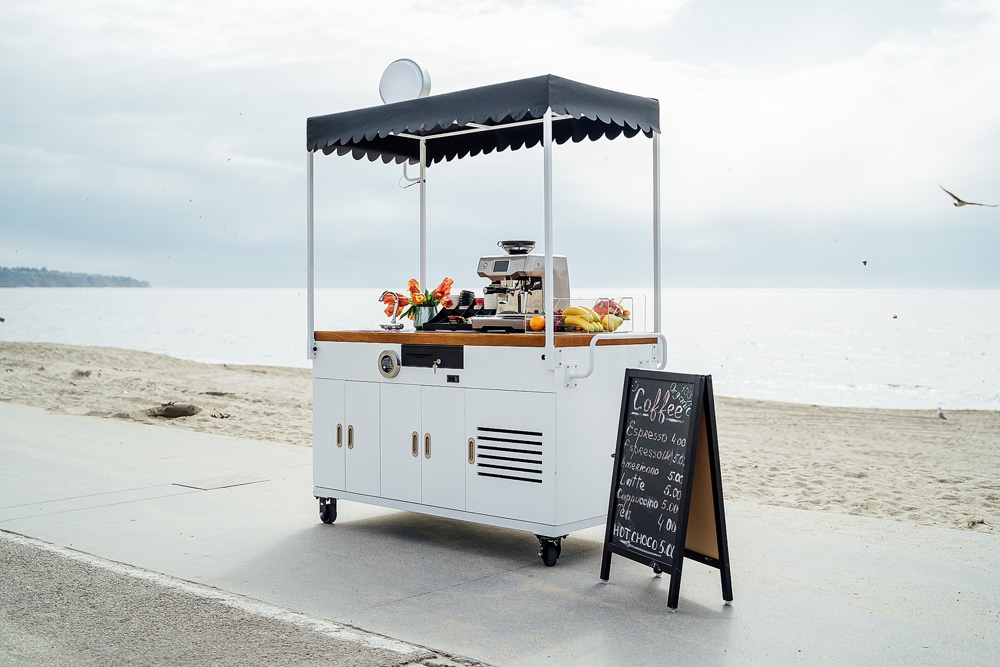 Every coffee cart vendor will tell you the equipment has to work as hard as the operator does. We hold each Ferla cart to that standard before it leaves our shop.

 More and more brands use a mobile coffee cart to put their name directly in front of customers instead of relying on ads alone. Ferla carts have appeared in campaigns for Tiffany & Co., Google, Lululemon, and Sugarfish. In each case we delivered a fully branded cart, and the team on site handed out coffee, built goodwill, and created a moment worth photographing.


