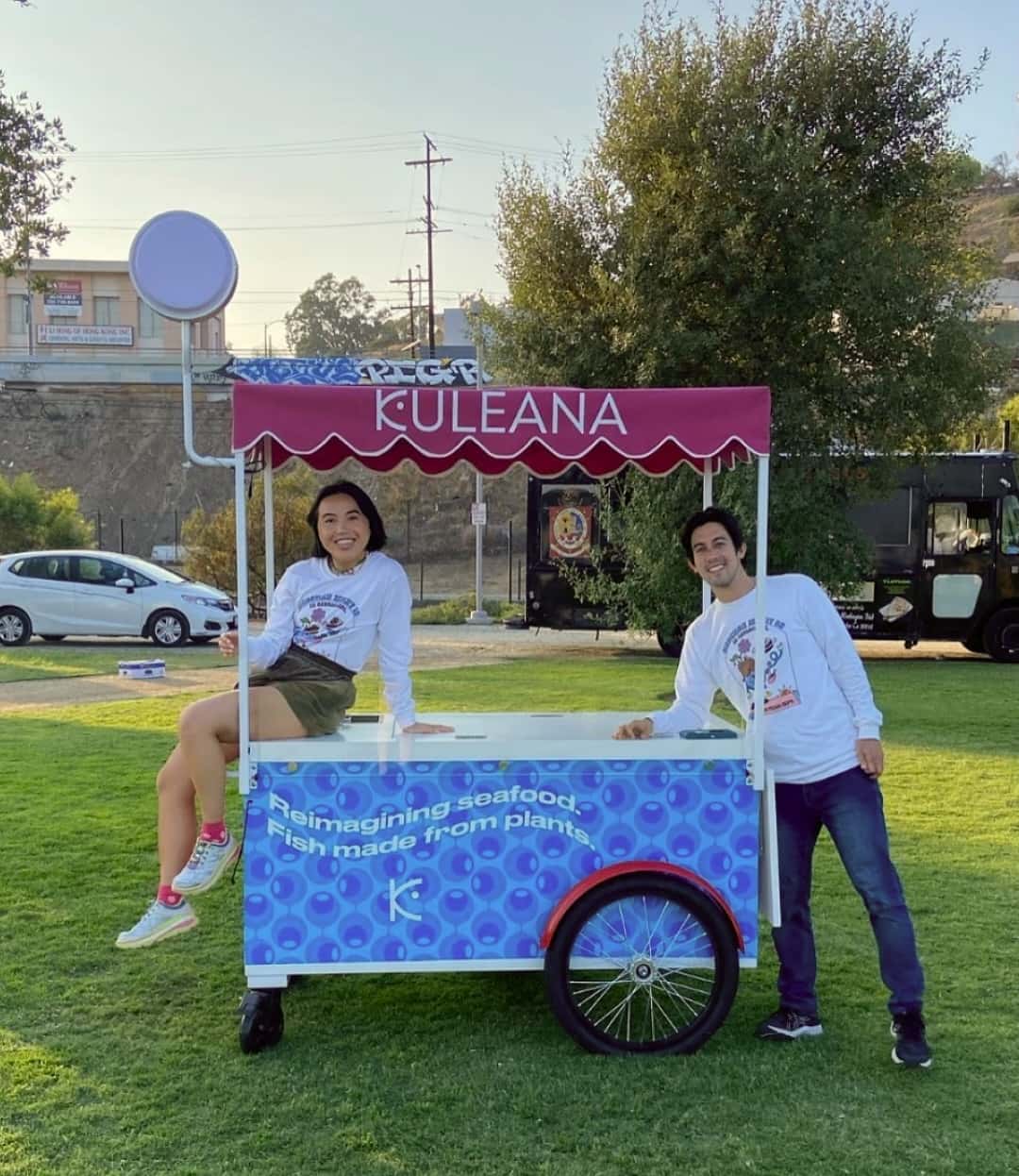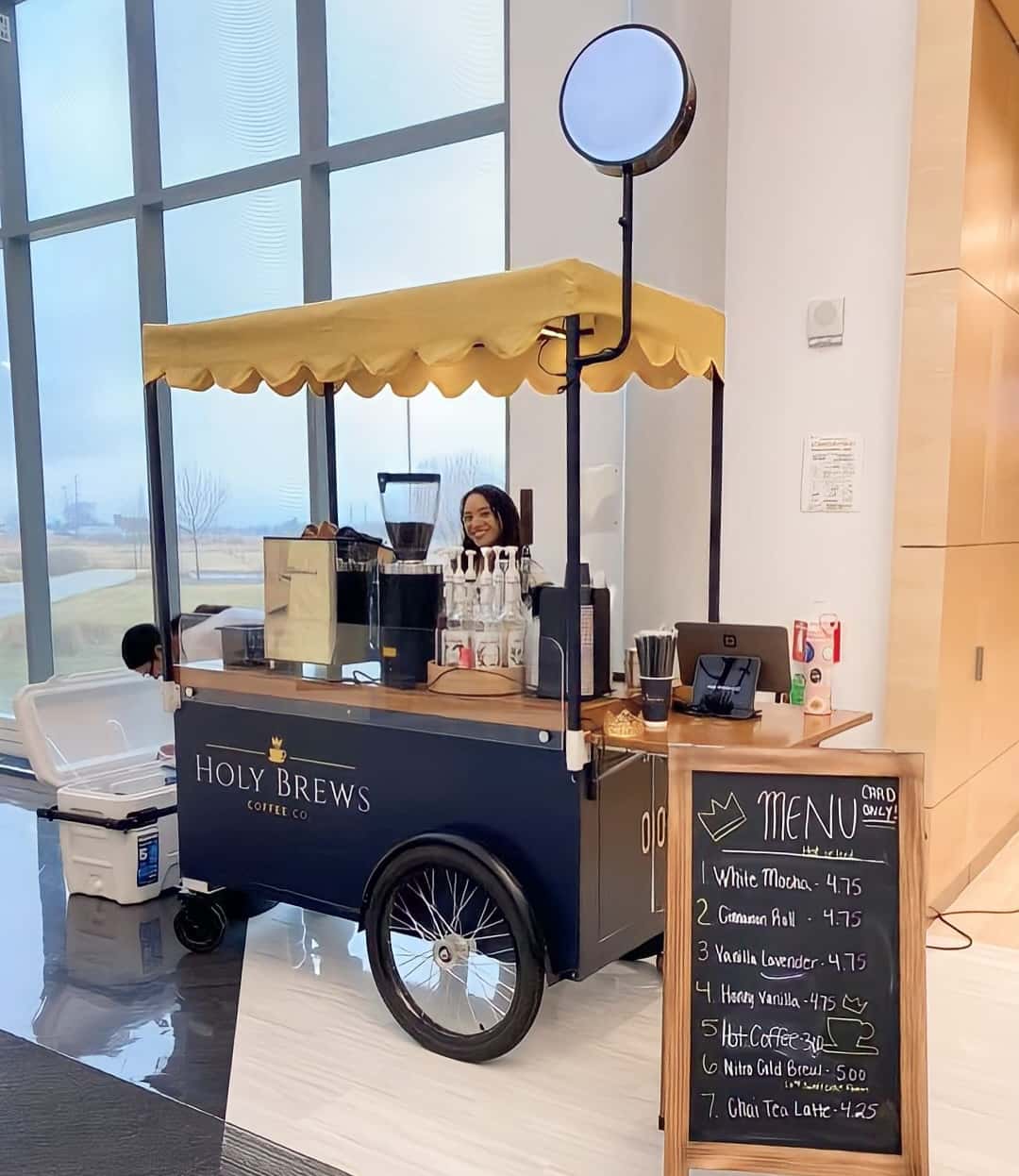
If you’ve been searching for a straight answer, here it is: a coffee cart typically costs between $4,499 and $7,499 for the cart or bike itself, and somewhere between $8,000 and $20,000 once you add equipment, permits, inventory, and working capital. That’s a fraction of what it takes to open a coffee shop – brick-and-mortar buildouts routinely run $80,000 to $300,000+ before a single espresso shot is pulled – and it’s usually cheaper than a full coffee truck, which can cost $50,000 to $150,000 once you factor in the vehicle itself.
But “it depends” is the honest answer, because coffee cart startup costs swing wildly depending on the platform you choose, how much equipment you add, and which city you’re operating in. This guide breaks down every real number: the cart itself, the equipment, the permits, the monthly operating costs, and what you can realistically expect to earn. We’ll also show you exactly what a Ferla coffee cart or coffee bike costs, model by model, so you’re working with real prices instead of guesswork.
1. Overview: What It Really Costs to Launch a Mobile Coffee Business
Before diving into line items, here’s the big picture. Total coffee cart startup costs generally break down into five buckets:
- The cart or bike platform – from $4,499 to $7,499 depending on the model and format
- Coffee equipment – espresso machine, grinder, and POS system, typically $3,000–$12,000
- Permits, licenses, and insurance – usually $500–$3,000 depending on your city and state
- Inventory and initial supplies – coffee beans, milk, cups, syrups: $500–$1,500 to get started
- Working capital – a cash cushion to cover your first 1–3 months of operating expenses before revenue stabilizes
Put together, most new owners launch somewhere between $8,000 and $20,000, with the platform itself being the single biggest line item – and the one where your choice of format has the biggest impact on both upfront cost and long-term flexibility.
That’s dramatically less than opening a coffee shop, where lease deposits, buildout, and equipment alone can eat through six figures before opening day. It’s also generally lower than a full-size coffee truck, where the vehicle purchase, commercial kitchen build-out, and DMV/vehicle-specific permitting add tens of thousands of dollars most cart owners never have to pay. A coffee cart – whether it’s a traditional push cart or a pedal-assist coffee bike – gives you a real espresso business at a fraction of the investment and a fraction of the risk.
2. Choosing Your Platform: Bike vs. Push Cart
This is the decision that shapes everything else in your budget, so it’s worth slowing down here. Broadly, mobile coffee cart platforms fall into two categories:
Coffee bikes (like the Ferla X, Ferla X Glacier, and Ferla Mini) are pedal-and-throttle e-bikes with a built-in coffee bar. You ride them to your location – a farmers market, an office park, a beachfront boardwalk – instead of towing or trailering them. That mobility does more than save you a tow vehicle: it means you can serve multiple locations in a single day, chase foot traffic as it moves, and turn up at private events and brand activations without needing a truck and driver.
Push carts (like the Mini Cart and Grande Cart) are stationary units without pedal assist. You wheel them into position and set up for the day – ideal if you’ve secured a great fixed spot (a lobby, a plaza, a regular market stall) and don’t need to relocate mid-shift.
From a pure cost standpoint, both formats start in a similar range. The real difference shows up in ongoing costs and flexibility:
- A coffee bike needs no separate vehicle or trailer to reach a new pitch, which can mean lower transportation costs and more flexibility if a permit only covers certain hours or locations.
- A push cart has a lower learning curve (no bike operation involved) and can suit tight indoor spaces where a bike’s footprint doesn’t fit.
- Bikes also tend to attract more attention – a genuine advantage if part of your plan includes brand partnerships or private event bookings, where the bike itself becomes a marketing asset (more on that in Section 9).
If you’re still deciding, browse the full range on the coffee carts page to compare every model side by side before committing to a format.
3. Ferla Model Comparison & Pricing
Here’s where most “coffee cart cost” guides get vague – they’ll quote a $4,000–$10,000 range and leave you guessing. Below are the actual starting prices and specs for every current Ferla model.
| Model | Price | Format | Key Standard Features | Popular Add-Ons | Load Capacity | Footprint |
| Ferla X | From $6,499 ($199/mo) | E-bike (pedal + throttle) | 100Ah AGM battery, LED lighting, 53″ × 27.5″ work surface | Fridge/freezer, sink, dual water tanks, 100W solar panel, pedal assist up to 25 miles, cold brew tap, custom LED signage | 500 lbs | 106″ × 39–50″ |
| Ferla X Glacier | From $7,499 ($199/mo) | E-bike (pedal + throttle) | Same bike platform, large 7.7 cu ft freezer built in | Sink + water system, solar panel, cold brew tap, LED signage, pedal assist | 500 lbs | 106″ × 29–40″ |
| Ferla Mini | From $4,499 ($199/mo) | Compact folding e-bike | Folding frame, narrow 34″ width, two-sided storage, three fold-out tables | Pedal assist, solar panel, cold brew tap, rear storage box, folding-frame upgrade | 500 lbs | 90″ × 34″ |
| Mini Cart | From $4,499 ($199/mo) | Stationary push cart | 100Ah battery, LED lighting | Fridge/freezer, sink + water system, solar panel, cold brew tap, LED signage, oversized wheels | 400 lbs | 48″ × 30–38″ |
| Grande Cart | From $4,999 ($199/mo) | Stationary push cart | 100Ah battery, extended 30″ × 63″ counter | Small (1.78 cu ft) or large (7.7 cu ft) freezer, sink + water system, solar panel, cold brew tap, oversized wheels | 500 lbs | 68″ × 30–38″ |
Every model above ships CE/RoHS certified and IPX5 water-resistant, with financing available from $199/month, subject to credit approval.
Every price shown here is a starting price – the final cost depends on which add-ons you build into your setup (a freezer, a sink, solar power, a custom wrap, and so on). The best way to see how your choices affect the total is to use the 3D configurator: pick your model, add the features your business needs, and watch the price update in real time. Once you’ve got a configuration you like, a Ferla team member will walk you through the final specs and put together your exact quote – you don’t have to figure out the last details alone.
4. Add-Ons and Optional Equipment Costs
4a. Platform Add-Ons
The base price of any Ferla model covers a fully functional coffee cart or coffee bike – a working surface, lighting, and a battery system. From there, most owners add a handful of options to match their menu and business model:
- Refrigeration (mini fridge/freezer up to a 7.7 cu ft option) – needed if you’re serving milk-based drinks, cold brew on tap, or frozen treats
- Sink and water system – often required by local health departments for anywhere serving prepared beverages
- Solar panel (100W) – extends your battery life for full-day events without needing to plug in
- Pedal assist upgrade (bike models) – extends your range, useful if you’re covering more ground or hillier routes
- Cold brew tap, custom LED signage, and branded wraps – smaller add-ons that shape the customer experience and your brand presence
Again, all of this is priced in real time through the configurator so you can see exactly how each option moves your total before you commit.
4b. Coffee Equipment You’ll Need Separately
A Ferla bike or cart is the platform – the vehicle, the counter, the storage, and the power system. You’ll still need to source your own coffee-making equipment, and this is one of the bigger line items in any coffee cart budget:
- Espresso machine – a compact 1- or 2-group unit suited to cart use typically runs $1,500–$6,000, depending on whether you buy new or refurbished
- Grinder – a commercial-grade grinder generally costs $300–$1,500
- POS system – a mobile card reader and point-of-sale setup usually runs $0–$500 upfront (many providers make their money on transaction fees instead), plus ongoing processing costs
- Water filtration – a portable filtration setup, if not already covered by your sink system, is typically $100–$400
All told, budget $3,000–$12,000 for coffee equipment on top of your platform cost, depending on whether you go entry-level or invest in higher-end gear from day one. Since this equipment isn’t something Ferla manufactures or sells, shop around and compare a few suppliers before you buy – pricing and availability vary quite a bit by brand and region.
5. Permits, Insurance, and Legal Costs
This is the part of the budget new owners underestimate most often, and it varies more by city than almost any other line item. As a general guide, expect to budget for:
- Business license – typically $50–$500, depending on your city and business structure
- Mobile food vendor permit – often $100–$1,000 annually, and sometimes tied to a specific zone or route
- Health department permit – usually $200–$1,000, and frequently requires a passed inspection before you can legally serve drinks
- Commissary agreement (if required in your city) – some jurisdictions require mobile food operators to prep or restock from a licensed commercial kitchen, which can add $200–$800 per month
- General liability insurance – roughly $500–$1,500 per year for a small mobile vending operation
- Vehicle/bike registration, if your local rules classify your cart as a vehicle for street use
The single biggest variable here is location. Requirements differ significantly by city, county, and state – some cities have streamlined mobile vending permits designed to encourage small food businesses, while others have dense, slow-moving processes. Before you budget a final number, check directly with your local health department and city hall for the exact permits, fees, and inspection requirements in your area.
6. Monthly Operating Costs
Once you’re up and running, plan for these recurring costs:
- Inventory (coffee, milk, cups, lids, syrups, napkins) – typically $500–$2,000/month, scaling with drink volume
- Commissary or storage fees, if applicable – $200–$800/month
- Insurance – spread monthly, roughly $40–$125/month
- Permit renewals, prorated – varies, but budget $50–$150/month on average
- Marketing (social media ads, flyers, local sponsorships) – $100–$500/month, especially in your first few months
- Maintenance – battery charging, tire wear, general upkeep – usually minor, but budget $50–$150/month
One advantage of a coffee bike or cart over a food truck: there’s no vehicle loan payment, no commercial auto insurance, and – depending on your local rules – sometimes no requirement for a full commissary kitchen if you’re not prepping raw food on-site. That can mean meaningfully lower monthly overhead than a comparable coffee truck business, though you should confirm the specifics with your local health department since requirements vary.
7. Financing: Own a Ferla for $199/Month
Instead of paying the full platform price upfront, every Ferla model is available with financing starting from $199/month, subject to credit approval. That reframes the biggest line item in your startup budget: rather than needing $4,500–$7,500 in cash before you can start earning, you can put a Ferla to work generating revenue while paying it off in manageable monthly installments – much like financing any other piece of business equipment.
This is a meaningfully different approach than the SBA loans, equipment financing, and credit-card funding that most generic small business guides point you toward. Those options can work, but they typically involve a longer application process, credit checks tied to loan amounts in the tens of thousands, and interest structures built for much larger purchases. Financing directly through Ferla is built specifically around the actual cost of the platform, which makes the math simpler and the approval process faster for most first-time owners.
Head to the financing page to see current terms, or start a quote to get exact numbers for the model and configuration you’re considering.
8. Revenue Potential & Break-Even
Here’s where the math starts working in your favor. A single barista running a well-positioned coffee cart can typically serve 15–30 drinks per hour during peak periods, with an average ticket of $5–$7. At a conservative 20 drinks per hour across a 5-hour shift, that’s $500–$700 in daily revenue – and busier locations or events can push well past that.
A few rough scenarios, based on 5-day weeks:
- Conservative: 15 drinks/hour × 4 hours/day × $5 average ticket = $300/day, or roughly $6,000/month
- Moderate: 20 drinks/hour × 5 hours/day × $6 average ticket = $600/day, or roughly $12,000/month
- Strong: 25–30 drinks/hour × 6 hours/day × $6.50 average ticket = $975–$1,170/day, or $19,500–$23,400/month
Models with a larger freezer – like the Ferla X Glacier or Grande Cart – can push average tickets higher by adding cold brew, frappés, or desserts to the menu, which lifts revenue without adding much to labor time.
Break-even depends heavily on your starting costs, but with a moderate scenario and $12,000–$15,000 in total startup costs, many owners reach break-even somewhere in their first 3–6 months of consistent operation – faster if they’re financing the platform rather than paying the full amount upfront, since that frees up cash for equipment, permits, and marketing from day one.
9. Real Ferla Owners & Brands: What They Spent and Achieved
Numbers on a page are one thing – real businesses running on these platforms are another. Two very different use cases show up again and again among Ferla owners:
Owner-operators building a full business. Owners like Zona Coffee Company (running a Ferla Mini) and Café Refuge (running a Mini Cart with a full espresso setup) have used their carts as their primary business – a lower-cost, lower-risk entry point into coffee retail than a shop lease. Ghost Coffee, operating a Grande Cart, took advantage of the larger work surface to run a broader cold-drink menu alongside espresso.
Brands using Ferla for short-term activations. Not everyone who works with Ferla is launching a full-time coffee business. Major brands including Illy Coffee, Hennessy, 818 Tequila, Miu Miu, Jimmy Choo, and Coca-Cola have booked Ferla bikes and carts for private events, product launches, and marketing activations – see the full lineup on the events page. For these brands, the bike itself doubles as a piece of branded, moving marketing, drawing attention in a way a static booth can’t.
Whether you’re building a full-time business or exploring one-off event bookings, the same underlying cost structure applies – you’re just choosing how you scale it.
10. Cost-Saving Tips for New Owners
A few practical ways to keep your total startup cost down without cutting corners on your customer experience:
- Finance the platform instead of paying cash upfront. Spreading the biggest single cost over monthly payments frees up cash for permits, inventory, and marketing when you need it most – in your first few months.
- Start with the essentials, add options later. You don’t need every add-on on day one. A base model with a sink and battery can get you serving drinks; a solar panel or a bigger freezer can be added once you know your route and volume.
- Buy refurbished equipment where it makes sense. A refurbished espresso machine from a reputable seller can cut your equipment budget significantly without sacrificing quality.
- Check permit bundles. Some cities offer discounted or combined mobile vendor permits – always worth a call to your local health department before assuming the worst-case fee.
- Negotiate a flat monthly rate with a commissary, if one is required, rather than paying per visit.
- Start with one strong location before expanding. It’s tempting to chase multiple spots right away, but nailing one reliable, high-traffic pitch first makes your revenue – and your break-even timeline – far more predictable.
11. FAQ
How much does a coffee cart cost to start? Most new owners spend $8,000–$20,000 total, including the cart or bike platform ($4,499–$7,499), coffee equipment, permits, and initial working capital.
Is a coffee bike cheaper to run than a coffee cart? Both formats start in a similar price range. Coffee bikes can reduce transportation costs since they don’t require a separate tow vehicle, while push carts have a smaller learning curve and suit fixed locations well.
Do I need a special permit for a mobile coffee cart? Yes – requirements vary by city, but most areas require a business license, a mobile vendor permit, and a health department permit. Check with your local health department for exact requirements.
How much can a coffee cart make per month? Revenue varies widely by location and hours, but a moderately busy cart serving 20 drinks/hour across 5-hour shifts can generate roughly $12,000/month in a typical scenario.
Can I finance a coffee cart instead of paying upfront? Yes – Ferla offers financing starting from $199/month, subject to credit approval, on every model.
What’s the difference between the Ferla models? The Ferla Mini is the most affordable and compact option; the Ferla X and Ferla X Glacier are pedal-assist coffee bikes with larger work surfaces and freezer capacity (the Glacier especially, for cold-focused menus); the Mini Cart and Grande Cart are stationary push carts, with the Grande offering the largest counter space. Use the configurator to compare them side by side.
12. Conclusion: What It Really Takes to Get Started
Strip away the guesswork, and starting a coffee cart business comes down to a manageable, well-defined set of costs: a platform starting from $4,499, coffee equipment in the $3,000–$12,000 range, permits and insurance that depend on your city, and a working capital cushion to get you through your first few months. Compared to a coffee shop or a full coffee truck, it’s a dramatically lower barrier to entry – and with financing available from $199/month, you don’t need the full amount in cash to get moving.
The best next step is to see the real numbers for your setup. Build your ideal configuration in the 3D configurator, or skip straight to a personalized quote – our team will help you finalize the exact model, add-ons, and financing that fit your budget and your business plan.